


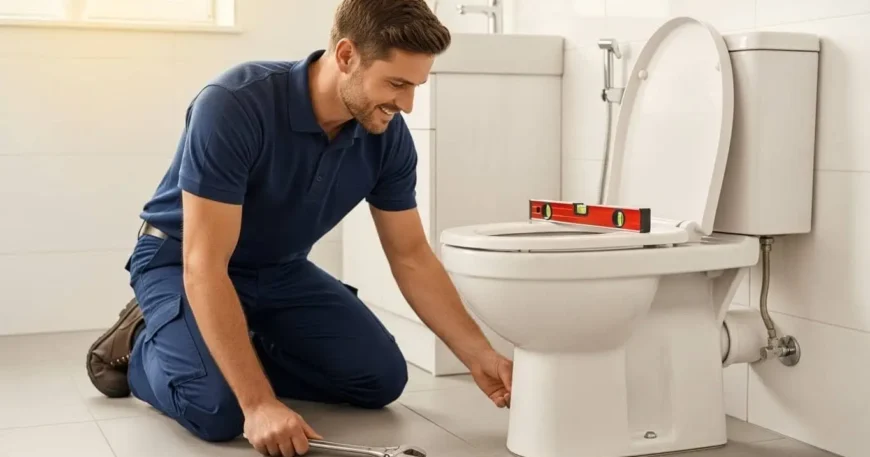
Why Is My Toilet Wobbly?
If you’ve noticed your toilet rocking or shifting when you sit down, you’re not alone—and you’re right to be concerned. A wobbly toilet isn’t just an annoying inconvenience. Left unaddressed, it can lead to water leaks, floor damage, and costly repairs down the line.
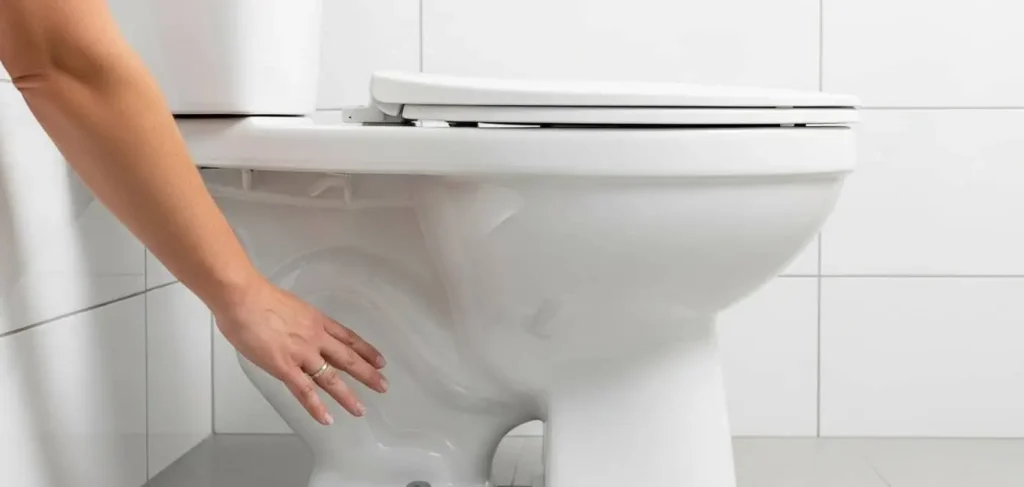
The good news? Understanding what causes a toilet to wobble is the first step toward fixing it. In most cases, the problem stems from worn hardware, damaged seals, or shifting floors—issues that become worse over time if ignored. The sooner you identify the root cause, the easier (and less expensive) it is to resolve.
In this guide, we’ll walk you through the most common reasons your toilet moves when you sit on it, what risks come with delaying repairs, and when it makes sense to call in experienced professionals.
Common Causes of a Wobbly Toilet
Loose or Corroded Closet Bolts
One of the most frequent culprits behind a rocking toilet is loose or corroded closet bolts. These are the bolts that secure your toilet to the floor and connect it to the toilet flange underneath. Over time, these bolts can loosen due to regular use, or they may corrode from prolonged exposure to moisture.
When the mounting hardware weakens, the toilet loses its stability. You might notice the toilet shifting slightly side to side or front to back. If the bolts are only loose, tightening them may temporarily solve the problem. However, if they’re rusted or stripped, they’ll need to be replaced to restore a secure connection.
Ignoring loose bolts allows the toilet to continue moving, which can damage the wax ring seal and lead to hidden moisture seeping beneath your flooring.
Worn or Compressed Wax Ring
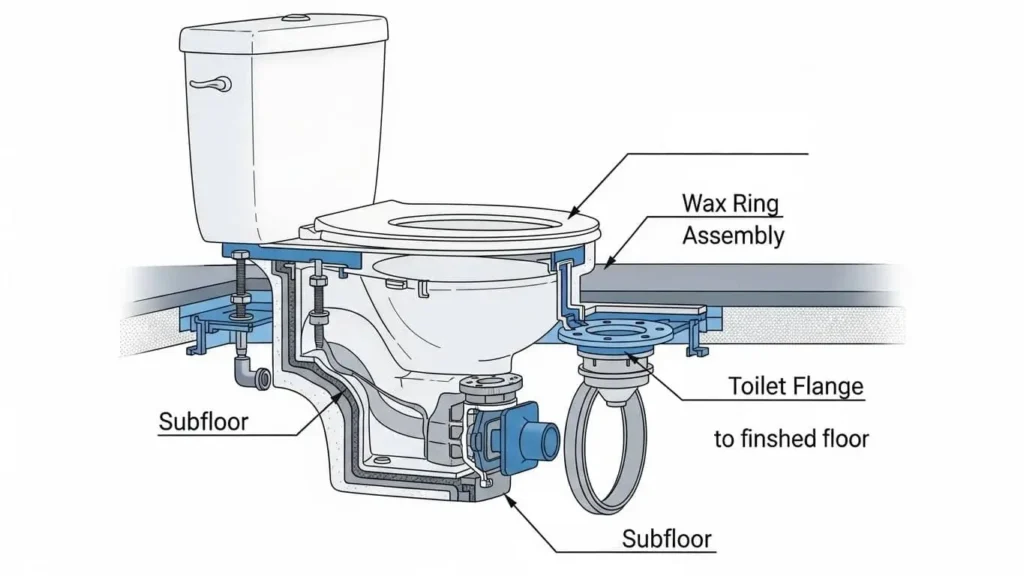
The wax ring sits between the base of your toilet and the toilet flange, creating a watertight seal that prevents leaks. Over time, this ring can compress, crack, or deteriorate—especially if the toilet has been wobbling for a while.
Once the wax ring is compromised, water from the toilet can escape during every flush. This water often goes unnoticed because it seeps directly into the subfloor or between tiles. The result? Mold and mildew growth, foul odors, and long-term structural damage to the flooring beneath your bathroom.
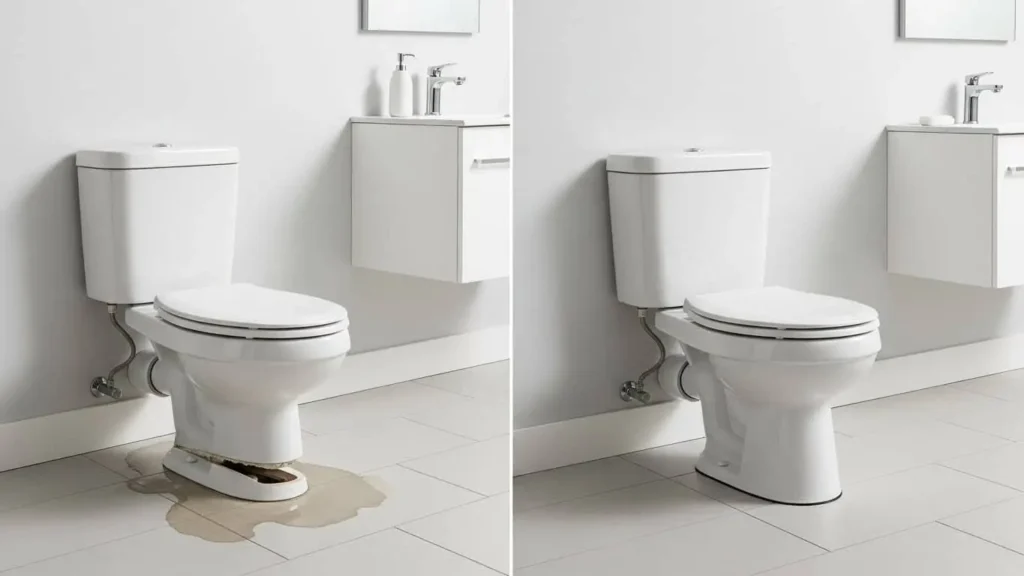
A worn wax ring is one of the sneakiest causes of a wobbly toilet because the damage happens out of sight. If you notice a musty smell near your toilet or see discoloration on the floor around the base, the wax ring may already be failing.
Uneven Flooring or Subfloor Settling
Sometimes the issue isn’t with the toilet itself—it’s with the floor underneath. Homes naturally settle over time, and bathroom floors are particularly vulnerable due to moisture exposure. If your subfloor has shifted, warped, or become uneven, your toilet will rock no matter how tight the bolts are.
Uneven flooring is common in older homes or in bathrooms where water damage has weakened the subfloor. You might notice that the toilet wobbles more in one direction than another, or that the floor feels soft or spongy when you step near the base.
Placing shims under the toilet might seem like a quick fix, but it doesn’t address the underlying problem. In fact, shimming a toilet on a damaged subfloor can make things worse by creating gaps that allow water to pool and cause further deterioration.
If the floor itself is the problem, a professional inspection can help determine whether you’re dealing with minor settling or more serious moisture damage that requires subfloor repair.
Cracked or Damaged Toilet Flange
The toilet flange is the fitting that connects your toilet to the drainpipe and anchors the closet bolts. It’s typically made of PVC, cast iron, or brass, and it sits flush with (or slightly above) your bathroom floor.
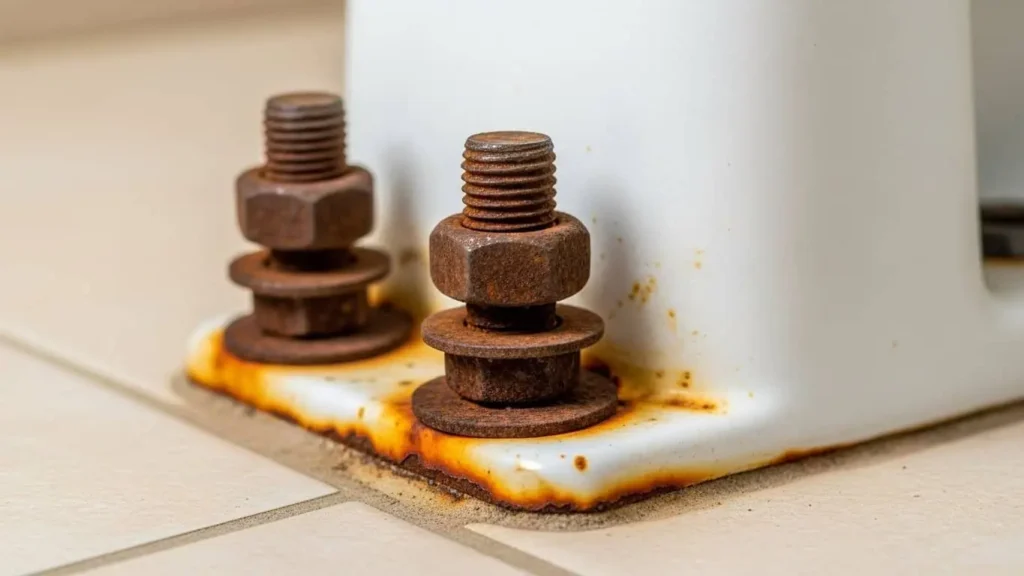
If the flange cracks, corrodes, or breaks, the bolts lose their anchor point. This makes it impossible to secure the toilet properly, no matter how many times you tighten the hardware. A damaged flange is especially common in older homes with cast iron plumbing, where corrosion can weaken the metal over time.
A broken flange often goes hand-in-hand with a rocking toilet base and water leaks. Because the flange is located beneath the toilet, diagnosing this issue usually requires removing the toilet entirely to inspect the plumbing connections.
Replacing a toilet flange isn’t a simple DIY task for most homeowners, as it involves working with plumbing systems and ensuring the new flange is level and properly sealed.
Hairline Cracks at the Toilet Base
In some cases, the porcelain toilet itself may be cracked. Hairline cracks along the base of the toilet can develop from overtightening bolts, impact damage, or natural wear over time. These cracks weaken the structural integrity of the toilet and allow it to shift or wobble.
Even small cracks can worsen quickly, especially when combined with the pressure and movement that comes with daily use. Water can also seep through these cracks, leading to hidden moisture problems and potential floor damage.
If you notice any visible cracks in the porcelain—especially near the base or around the bolt holes—it’s important to address them immediately. In most cases, a cracked toilet will need to be replaced rather than repaired to ensure safe, long-term performance.
What Happens If You Ignore a Wobbly Toilet?
It’s tempting to put off fixing a toilet that wobbles, especially if it still flushes and functions normally. But delaying repairs can lead to problems that are far more expensive and difficult to resolve.
Water Leaks and Hidden Moisture
Every time a wobbly toilet rocks, it stresses the wax ring seal. Once that seal breaks, water escapes with every flush—often without any visible signs. This hidden moisture soaks into your subfloor, creating the perfect environment for mold and mildew to thrive.
Over time, you may notice soft spots in the floor, a persistent musty smell, or discoloration around the base of the toilet. By the time these symptoms appear, the damage has often spread beyond the immediate area.
Structural and Floor Damage
Prolonged water exposure weakens wooden subfloors, rots joists, and damages tile grout. What starts as a minor wobble can eventually compromise the structural integrity of your bathroom floor, requiring extensive repairs that go far beyond replacing a wax ring or tightening bolts.
Higher Repair Costs
Fixing a wobbly toilet early—whether by replacing bolts, a wax ring, or a flange—is relatively affordable. Waiting until the floor is damaged or mold has spread can turn a simple repair into a multi-thousand-dollar renovation project.
The bottom line? A professional inspection now can save you significant time, money, and stress later.
When to Call Johnny’s Handyman Services
Not every wobbly toilet requires a professional, but many do—especially if the cause isn’t immediately obvious or if you’re dealing with potential floor or plumbing damage.
At Johnny’s Handyman Services, our experienced professionals know how to diagnose the real cause of a rocking toilet and provide long-term solutions that protect your home. Whether it’s replacing corroded bolts, installing a new wax ring, repairing a damaged flange, or addressing subfloor issues, we handle the job thoroughly and correctly the first time.
In this guide, we understand that plumbing problems can be stressful, which is why we focus on clear communication, honest assessments, and quality workmanship. If you’re dealing with a toilet that moves when you sit on it, don’t wait for the problem to get worse. Reach out to our team for a professional inspection and peace of mind.
Frequently Asked Questions
Is it safe to use a toilet that wobbles?
While you can technically still use a wobbly toilet, it’s not recommended for long. The movement stresses the wax ring and mounting hardware, which increases the risk of water leaks and floor damage. If the toilet is rocking noticeably, it’s best to limit use until the issue is repaired.
Can a wobbly toilet increase my water bill?
In some cases, yes. If the rocking toilet has compromised the wax ring or caused a leak in the plumbing connections, water may be escaping with each flush. Over time, this can lead to higher water bills and significant moisture damage beneath your bathroom floor.
Will caulking around the base fix the wobble?
No. Caulking around the toilet base is often recommended to prevent water from pooling on the floor, but it won’t stabilize a wobbly toilet. In fact, caulking can hide the symptoms of a deeper problem, making it harder to detect leaks early. The wobble needs to be addressed at its source—whether that’s loose bolts, a worn wax ring, or a damaged flange.
How do professionals determine the cause of a wobbly toilet?
A professional will typically start by checking the closet bolts to see if they’re loose or corroded. If tightening the bolts doesn’t solve the problem, they’ll remove the toilet to inspect the wax ring, toilet flange, and subfloor for damage. This thorough approach ensures the real issue is identified and properly repaired.
Can I fix a wobbly toilet myself, or should I hire someone?
Simple fixes like tightening loose bolts can often be done by homeowners with basic tools. However, if the problem involves a damaged flange, subfloor issues, or hidden water damage, it’s best to call in experienced professionals. These repairs require specialized knowledge and tools to ensure a safe, lasting solution.
Final Thoughts
A wobbly toilet is more than just a minor annoyance—it’s a warning sign that something underneath needs attention. Whether the issue is loose bolts, a failing wax ring, or a damaged subfloor, taking action early can prevent water leaks, mold growth, and expensive structural repairs.
If you’re not sure what’s causing your toilet to rock or move when you sit on it, don’t wait to find out the hard way. Contact Johnny’s Handyman Services today for a professional inspection and expert repair services you can trust.
Recent Posts